Dr. Pratheep Paranthaman
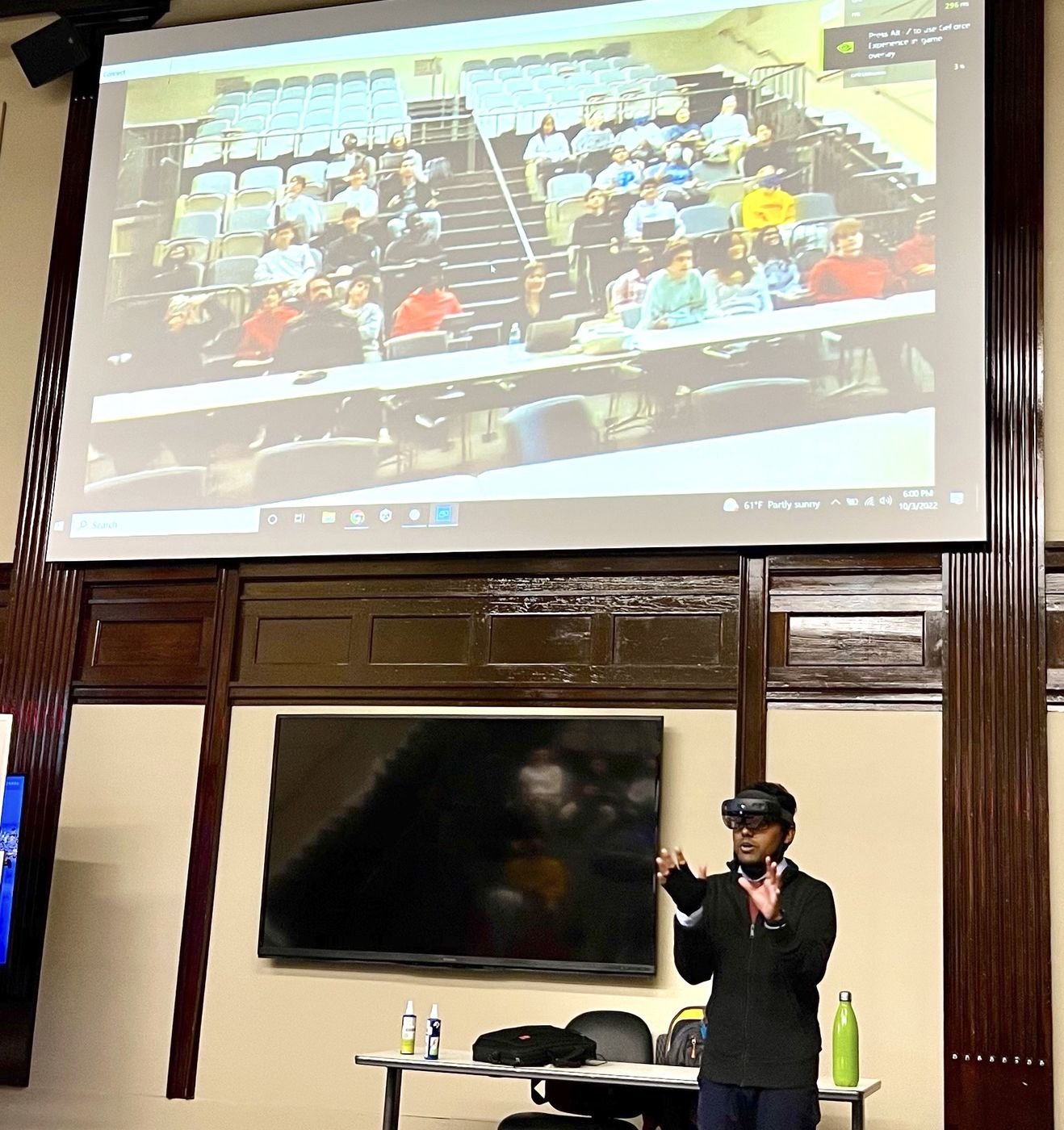
Presenting research with a HoloLens headset
AR / VR / MR6 yrs
EEG Research5 yrs
Serious Games3+ yrs
Games User Research2 yrs
External Research Projects2
Student mentees: 13 primary-advised · 8 co-advised
Congressional App Challenge Judge (2020) · External reviewer, 2 Ph.D. theses
Active

Current Research Activities

Virtual Reality, Mixed Reality & EEG

VR/MR/EEG

Interaction design and user experience research across virtual and mixed reality — from fully immersive environments to prototyping single- and multi-modal interactions with headsets like the Microsoft HoloLens 2 — alongside EEG-based brain activity research measuring affective states and cognitive workload.

View Projects →

Games User Research

GUR

Understanding player experience, workload, and affective response through playtesting and physiological data.

View Projects →

Augmented Reality

AR

Applied AR experiences and learning applications, including collaborations with external partners.

View Projects →

Game Artificial Intelligence

AI

AI techniques applied to game systems and design, including approaches for player behavior modeling.

View Projects →
Archive

Past Research Activities

Research from earlier in my career — serious games for driver behavior under the EU-FP7 TEAM project, and human-robot interaction work from my M.S. research. Click a project to expand it.

Serious Games for Green & Safe Driving

EU-FP7 TEAM Project · University of Genoa
+

Serious games are a purpose-built tool rather than a pure entertainment environment — predominantly used for training and motivating users, spanning education, medicine, and the military. In this work, I focused on improving driver performance in the automotive and transportation sector through immediate feedback, driver coaching, and real-time gamification. The Serious Games and Community Building (SG-CB) application drew on cloud-based architecture to evaluate real-time vehicle signals and reflect driver performance directly in the game scene — tested through pilot and field tests across five European sites, with usability studies involving 18 test users. Five game typologies were developed around this framework: Competitions, Virtual Bank, Event-Analysis, Driver Game, and Passenger Game.

Driver Game — A Non-Interactive Gaming Interface

A non-interactive gaming option for drivers, giving immediate feedback through a gamified representation of performance. Two views reduce distraction: a driver view with an ambient gradient window shifting from pale yellow to green as performance improves, and a status view with detailed levels, scores, and lives — five levels total, with a bonus/malus system tied to real-time vehicle signals. Field-tested on public buses in Genoa, Italy.

Passenger Game — An Interactive Arcade Interface

An arcade space-shooter extending gamification to the wider community of road users. Passengers play in real time based on the driver's performance — good driving gives more scope to tackle enemies on screen, while harsh maneuvers and braking events flood the scene with obstacles. Also field-tested on public buses in Genoa, Italy.

Passive Serious Game Logic for Improving Driver Performance

EU-FP7 TEAM Project · University of Genoa
+

Three connected modules within the SG-CB smartphone application, working together to coach and reward safer driving behavior over time.

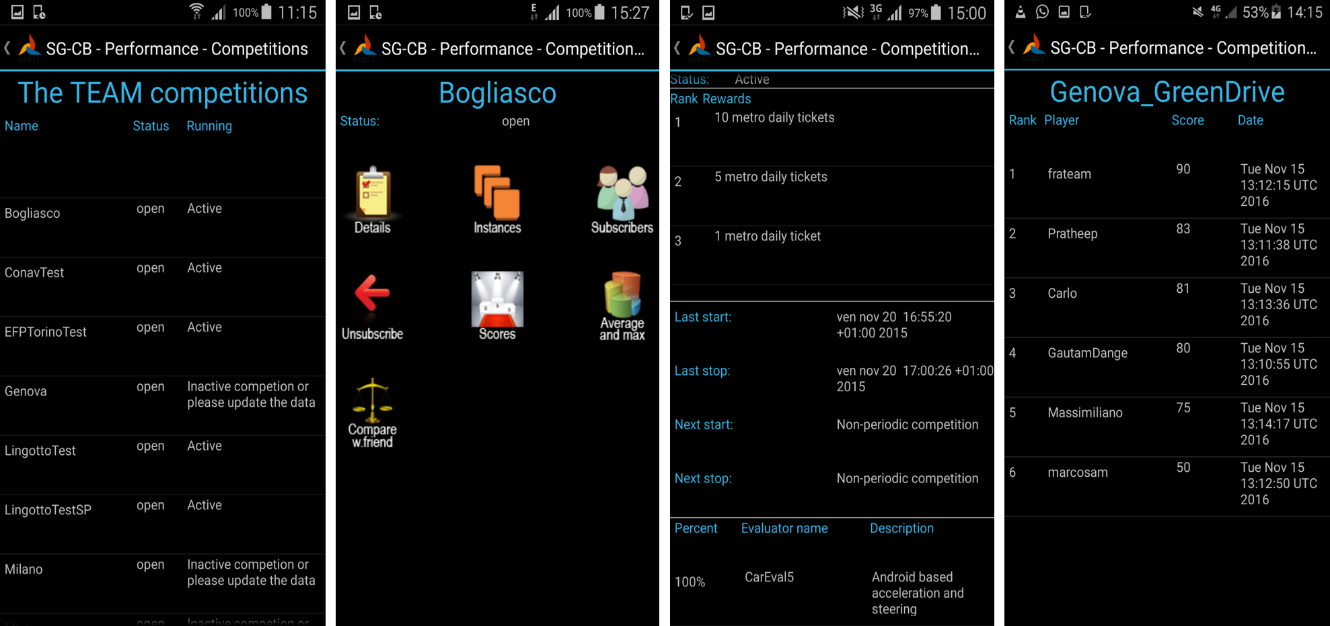
Competitions interface snapshots

Competitions

Time-framed competitions (10–15 minutes) tied to a geographic road network, where users subscribe and compete on driving behavior evaluated from vehicle signals (acceleration, brake, engine RPM, speed) and smartphone sensors (GPS, accelerometer, gyroscope), scored every 2 minutes. Completed competitions show rankings, scores, and peer comparisons, with harsh driving events plotted on Google Maps by severity.

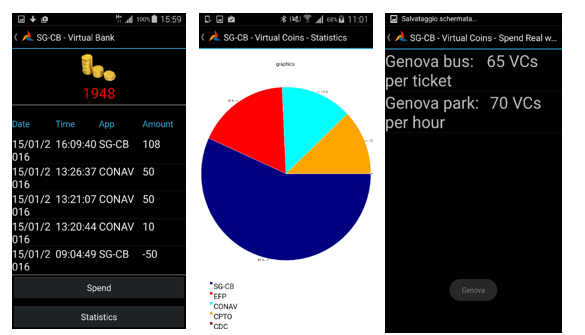
Virtual Bank interface snapshots

Virtual Bank

Users earn "Virtual Coins" as rewards for optimal driving — up to 100 per day — which accumulate in a virtual bank and can be redeemed on real-world entities like bus tickets or parking reservations. The app tracks full transaction history and a graphical breakdown of coins earned across applications.

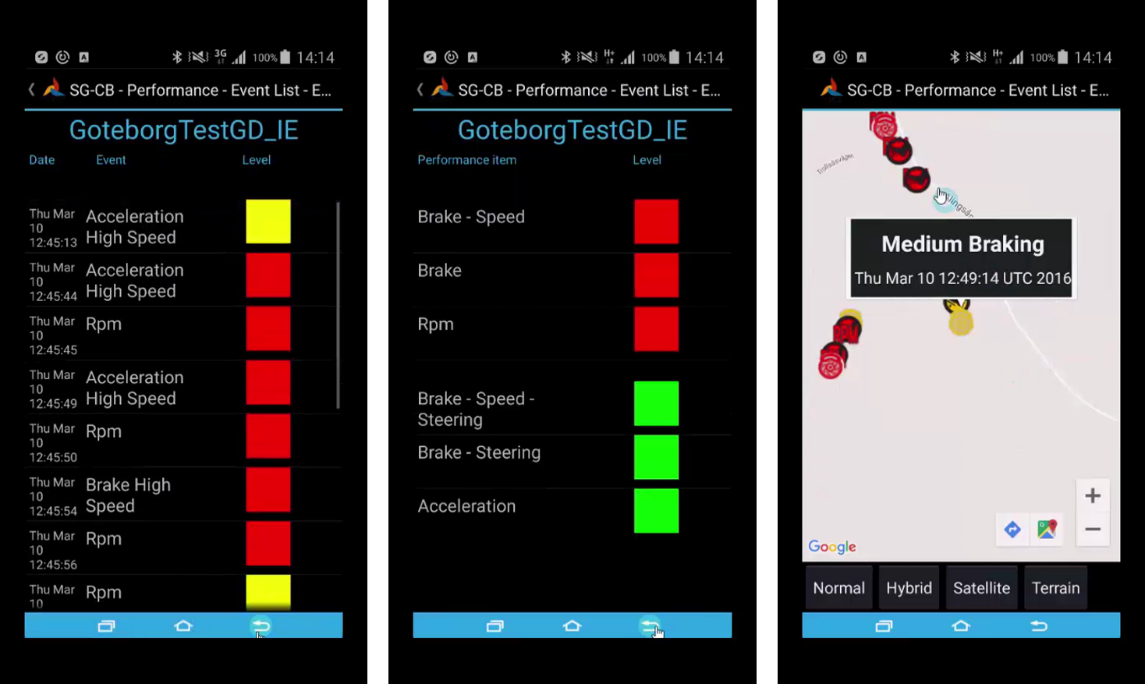
Event-Analysis interface snapshots

Event-Analysis

A post-drive coaching module presenting harsh driving events — high acceleration, harsh braking, steep steering angles — in three formats: a Diary (timestamped event list), a Summary (overall grade per signal, green/yellow/red), and a Map (geo-referenced event locations). Captured during field tests in Gothenburg, Sweden.

Human-Robot Interaction Research

M.S. Research · Heriot-Watt University
+
Best Poster Prize — Most Innovative Project, MSc Cohort

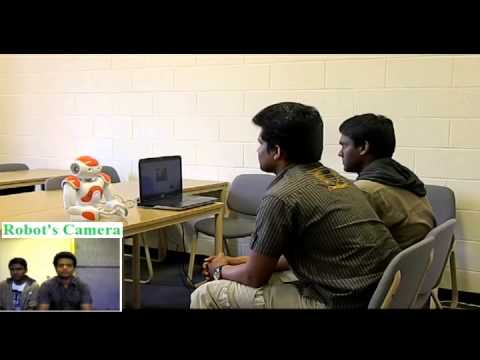
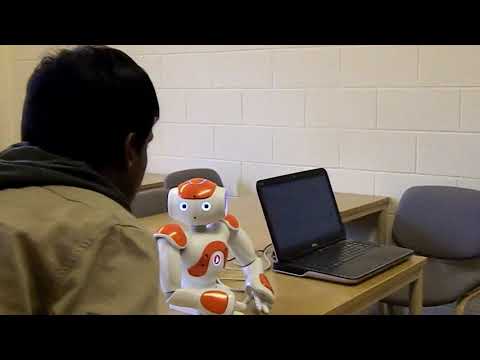
Research centered on attaining accuracy in uncertain multimodal input (speech and vision) using the NAO Torso humanoid robot, aimed at handling multi-party conversation engagement — turn-taking, decision-making, and attending to the right speaker among several.

Restaurant Assistance Robot

Designed a "Conversation Manager" coupling speech and vision into a single system, tested against a speech-only baseline to see whether combining modalities produced better user ratings for engaging multiple parties in conversation.

Face Tracking Module

Using NAO's dual cameras and OKI's face recognition engine, the robot detects, learns, and tracks a face — turning its head toward the target once a face is recognized.

Sound Localization Module

NAO's four-microphone array calculates the direction of the strongest voice signal and triggers the robot's head to turn toward the source.